Food and nutrition
How to change your dog's food without upsetting their stomach
A gentle plan to change your dog's food over one to two weeks, why you should never force it, and the signs that mean it is time to call the vet.
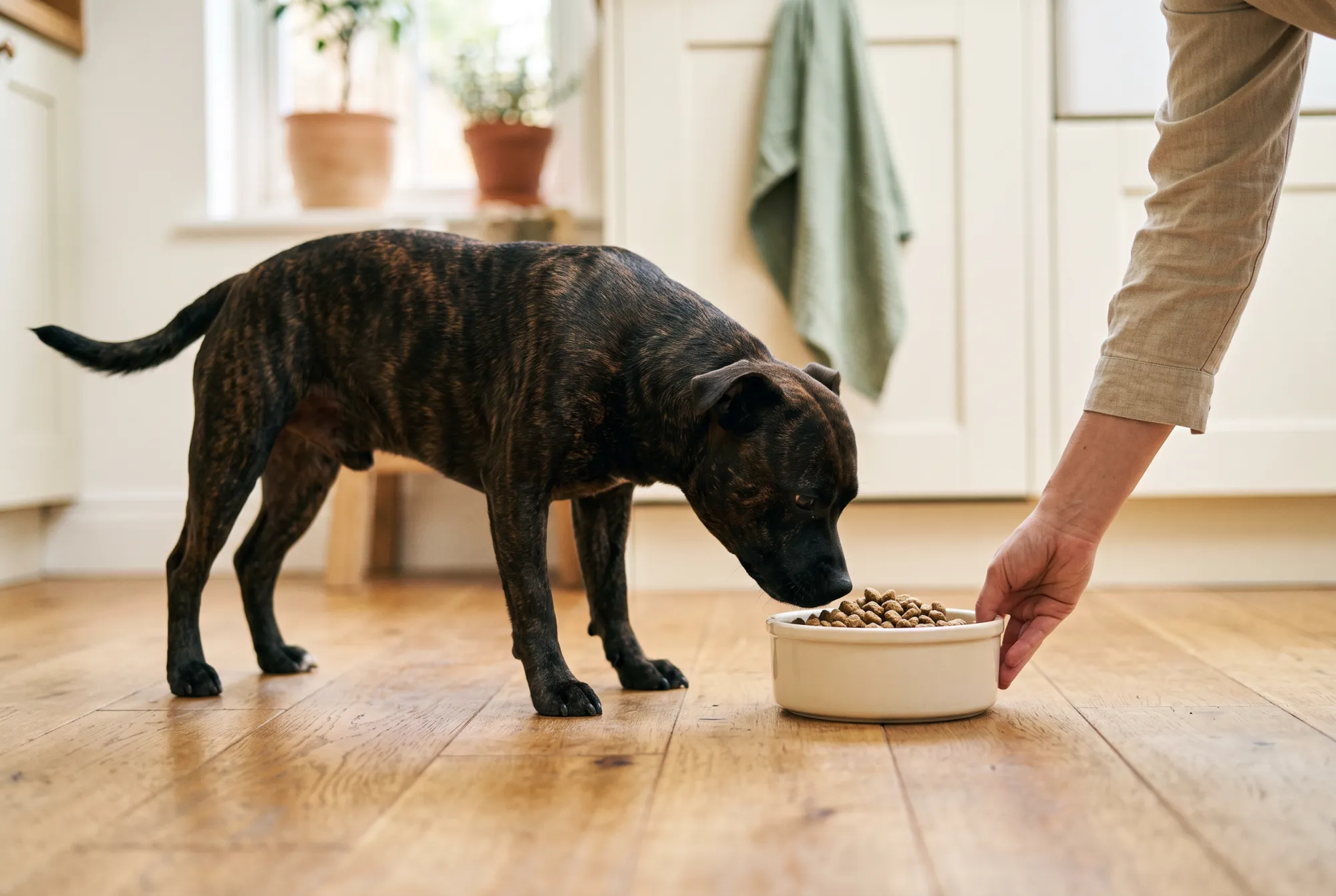
Change your dog's food gradually, over about a week or longer, by mixing a little of the new food into the old and increasing it every couple of days. A sudden switch can upset your dog's stomach, causing diarrhoea, wind, vomiting or a refusal to eat. Let your dog set the pace, and slow down if their poo softens.
The advice here comes from PDSA, Blue Cross, the Royal Kennel Club, Dogs Trust, Battersea and UK Pet Food. It sits alongside Snootly's Pup Kitchen, where recipes are labelled complete or complementary, and the Daily Log, where you can note each meal and any change in your dog's poo.
Why changing dog food too quickly upsets the stomach
PDSA explains that most dogs eat the same food every day for most of their lives, so a sudden change can be a shock to the gut. Diarrhoea tends to develop because the gut has not had time to adjust, even when the new food is perfectly suitable.
Diarrhoea and extra wind are the most common signs. Some dogs vomit or refuse the new food, and the Royal Kennel Club notes that some take time to adapt to new tastes. Battersea advises against changing too much of a dog's routine at once.
A gentle plan for transitioning your dog's food
Advice on timing varies. Blue Cross sets out a seven day switch in four steps. PDSA takes about two weeks, starting with a teaspoon of the new food in a separate bowl. The plan below uses Blue Cross's proportions at PDSA's gentler pace.
Swap food rather than adding it, so the total stays the same, and weigh it if you can. Finish on the new pack's feeding guide, since amounts vary between products. Treat each step as a minimum: dogs with sensitive stomachs, young puppies and fussy eaters may need longer.
- Days 1 to 3: the usual meal, plus a teaspoon of the new food in a separate bowl. Do not mix them yet.
- Days 4 and 5: about a quarter new food, three quarters old.
- Days 6 and 7: half new, half old.
- Days 8 to 10: about three quarters new, a quarter old.
- Days 11 to 14: phase out the old food, once your dog has eaten the mix happily for at least a week and their poo is firm.
Let your dog set the pace, and never force a new food
Your dog's appetite and poo should decide the speed, not the calendar. If their poo softens or they start leaving food, go back to the last mix that suited them. Blue Cross advises stopping the new food if your dog vomits or has diarrhoea, then trying again later, more slowly.
Never force your dog to eat, and never leave them hungry until they give in. The Royal Kennel Club advises calling your vet if a dog has eaten nothing for 24 hours, or a puppy for 12 hours, because puppies need to eat regularly.
Do not keep offering something new, either: the Royal Kennel Club says this can reinforce a taste for novelty. PDSA suggests set mealtimes instead, lifting the bowl after 15 minutes if it is untouched and offering fresh food a couple of hours later. Keep toppers and treats small; Dogs Trust suggests treats make up no more than 10 per cent of the diet.
Puppies, rescue dogs, vet diets and other special cases
The gradual approach applies to almost every change. What differs is when you start, and whether you or your vet sets the timetable.
If your dog has a health condition or a history of tummy trouble, talk to your vet before changing their food.
- A new puppy: keep to the breeder's food and routine while they settle in, then change slowly, over a week to ten days or longer.
- A rescue dog: ask what they have been eating, and offer the same or a similar food while they settle in.
- Puppy to adult food: the right age depends on size. Blue Cross suggests around a year, or up to about 18 months for large breeds; ask your vet about timing.
- A vet-prescribed diet: follow your vet's plan for the switch, even if it differs from this one.
- The old food runs out: if you can, buy a small bag of it to finish the change properly.
- Home-prepared meals: introduce them gradually too. They must be complete and balanced, which PDSA says is extremely difficult to get right, so involve your vet before they become the main diet.
What complete and complementary mean on dog food labels
UK Pet Food explains that complete is a legal term on pet food labels: a complete food gives your dog all the nutrients they need, in the right amounts, when fed as directed. A complementary food is only part of the diet and must be fed with something else, such as mixer biscuits. Blue Cross notes that wet food in tins and pouches can be either, so read the pack.
Use the new pack's feeding guide, or your vet's amount, as a starting point, then adjust to your dog's weight and body condition, as Dogs Trust advises. In Pup Kitchen, recipes are labelled complete or complementary, the portion tool gives a starting estimate rather than a prescription, and each recipe reminds you to check with your vet before changing your dog's diet.
What to write down, and when to call the vet
Keep a short record while you switch: what your dog ate at each meal, how much, whether they finished it and what their poo was like. It tells you when to move on or step back, and gives your vet facts rather than guesses.
Snootly's Daily Log lets you record each meal with the food type, amount and whether it was finished, and add a note to a poo entry. Anyone you invite to share your dog's care sees it too. Snootly Agent can help with questions, but it is AI: its answers can be wrong and it does not replace your vet.
A mild upset often settles within a few days, PDSA says, but stop the switch and call your vet if you see any of the signs below. Call sooner for a very young, elderly or unwell dog. Collapse, or repeated retching with a swollen tummy, is an emergency: contact your vet straight away, or an out of hours vet.
- Diarrhoea or soft poo lasting more than 24 hours.
- Blood or mucus in the poo, or blood in vomit.
- Repeated or continuous vomiting.
- Low energy, a painful tummy or signs of dehydration, such as sticky gums.
- An adult dog who has eaten nothing for 24 hours, or for 12 hours alongside vomiting or diarrhoea.
- A puppy who has eaten nothing for 12 hours, or any puppy with diarrhoea.
- Weight loss, or a dog who is neither eating nor drinking.
Common questions
How long does it take to switch dog food?
Usually one to two weeks. Blue Cross's plan reaches all new food on day seven, while PDSA takes about two weeks. Go by your dog, not the calendar: if their poo softens or they leave food, stay at the current mix for a few more days.
Can I switch dog food without mixing?
Only if your vet advises it. A sudden switch risks diarrhoea, wind, vomiting or refusal to eat, because the gut has had no time to adjust. If the old food runs out and you cannot get more, keep the rest of your dog's day the same, watch their poo closely and call your vet if diarrhoea lasts more than 24 hours.
What should I do if my dog won't eat the new food?
Go back to the last mix your dog ate happily, keep to set mealtimes and hold back on treats. The Royal Kennel Club suggests gently warming food to body temperature to bring out its smell, stirring well so there are no hot spots. Never force your dog to eat, and call your vet if they eat nothing for 24 hours, or 12 hours for a puppy.
Is it normal for a dog to have diarrhoea after changing food?
Yes, mild diarrhoea and extra wind are common after a food change and usually settle within a few days, says PDSA. Pause the switch until your dog's poo is firm. PDSA's vets advise calling your vet if diarrhoea lasts more than 24 hours, and sooner if there is blood or your dog is lethargic, vomiting, very young or elderly.