Food and nutrition
What can dogs eat? Safe human foods and toxic foods to avoid
What human food can dogs eat? See which foods are safe, which are toxic, where the dangerous ones hide and what to do if your dog eats one.
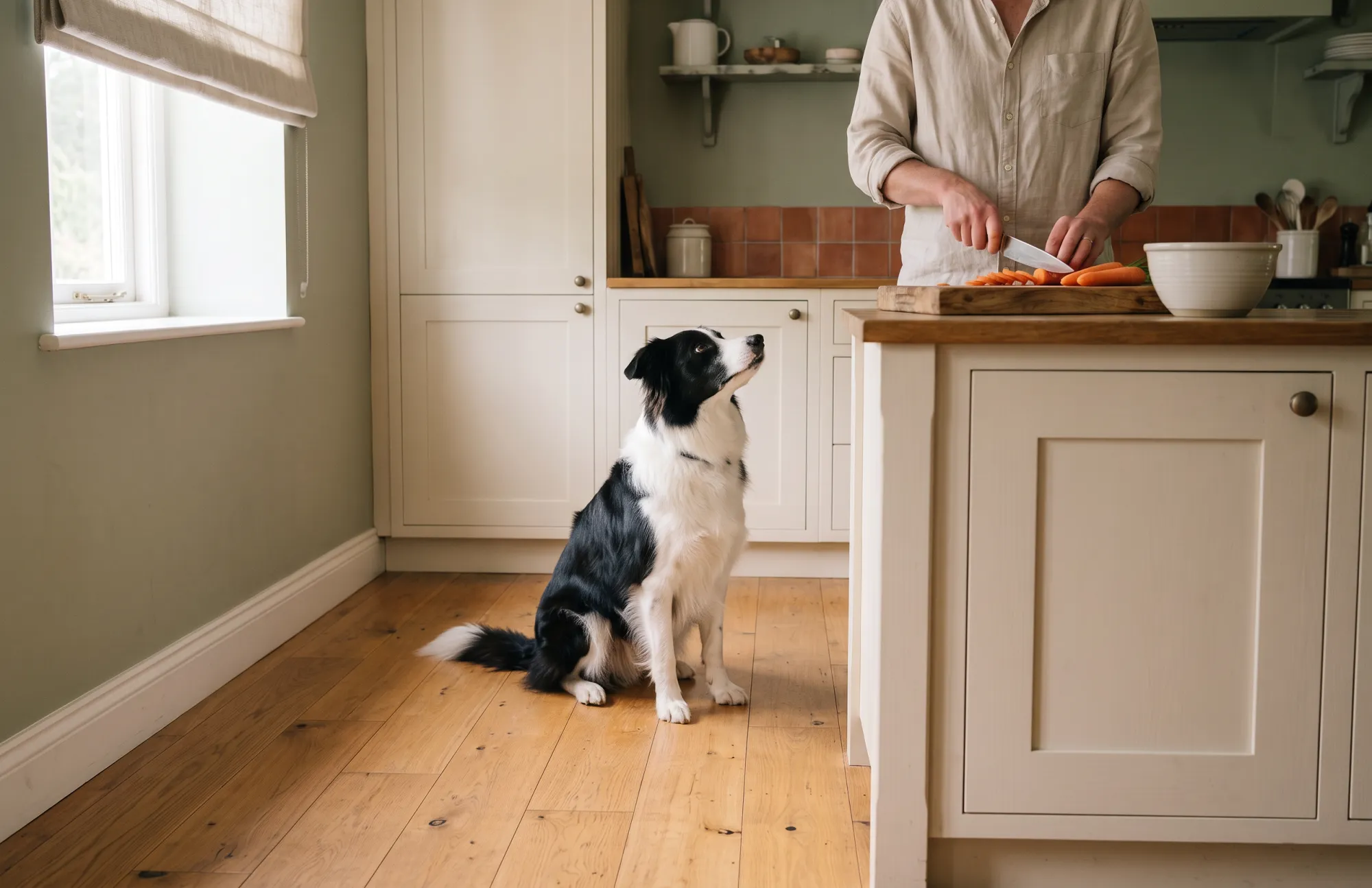
Dogs can eat many plain human foods in small amounts, such as cooked chicken, carrots, apple and blueberries, but some everyday foods are poisonous to them. The most dangerous include chocolate, grapes and raisins, onions and garlic, xylitol in sugar-free products, macadamia nuts, alcohol and raw bread dough. If your dog eats any of these, call your vet straight away, even if they seem well.
The verdicts here match Snootly's 'Can my dog eat this?' guide in Safety & Tips, which marks each food Go for it, Small amounts, Avoid or Toxic. The advice draws on published guidance from PDSA, Blue Cross, Dogs Trust, the RSPCA, the Royal Kennel Club and Animal PoisonLine.
What can dogs not eat?
Some foods that are harmless to people are poisonous to dogs, and others harm them by blocking or damaging the gut. For several there is no known safe amount: the RSPCA warns that any quantity of grapes, raisins, sultanas or currants can be toxic. Keep everything below out of reach, bins included.
How ill a dog becomes depends on what they ate, how much and their size, so leave that judgement to your vet.
- Chocolate and cocoa: contain theobromine, which dogs struggle to break down. Dark chocolate, cooking chocolate and cocoa powder are the most dangerous.
- Grapes, raisins, sultanas and currants: can cause kidney failure, and cooking or baking does not make them safe.
- Onions, garlic, leeks, chives and shallots: damage red blood cells and can cause anaemia, whether raw, cooked, dried or powdered.
- Xylitol: a sweetener in sugar-free products that can cause a sudden, dangerous drop in blood sugar and liver failure.
- Macadamia nuts: even a small amount can cause weakness, especially in the back legs, tremors and a high temperature.
- Alcohol and raw bread or pizza dough: dogs are thought to be more sensitive to alcohol than people, and raw dough rises in the stomach and produces alcohol.
- Caffeine in coffee, tea and some soft drinks: overstimulates the nervous system, muscles and heart.
- Mouldy food, from bins, compost or old leftovers: can cause tremors and seizures, often within an hour.
- Cooked bones, corn cobs and fruit stones: cooked bones splinter, and cobs and the stones from peaches, plums or cherries can block the gut.
- Fatty scraps and very salty food: fat trimmings, crackling and poultry skin can lead to pancreatitis, and a lot of salt eaten quickly can cause salt poisoning.
What human food can dogs eat?
Plenty of ordinary food is fine for dogs as an occasional treat, as long as it is plain and cut to a size your dog can manage. Leave out oil, butter, salt, seasoning and sauce, and remove cores, pips and stones. Fruit is sugary, so a few small pieces is plenty.
The foods below are generally fine in small portions for most healthy dogs. In Snootly's food guide most of them are marked Go for it, while rice, egg and cheese are marked Small amounts.
- Plain cooked chicken or turkey: no skin, bones, seasoning or gravy.
- Carrots: raw or cooked, cut into pieces that suit the size of your dog.
- Apple: sliced, with the core and seeds removed.
- Blueberries and strawberries: a few at a time.
- Banana: peeled, just a few slices.
- Cucumber, green beans and peas: plain, raw or cooked.
- Plain cooked rice: a small amount, with no oil, salt or flavourings.
- Plain cooked egg: a small amount, with no butter, oil or salt.
- Cheese: a small piece now and then, but never blue cheese.
- Peanut butter: a small amount, and only if the label shows no xylitol.
How to offer your dog a new food
Introduce one new food at a time, in a small plain piece, so that if your dog's stomach is upset you know what caused it. Blue Cross advises introducing new foods slowly, because too much can upset the stomach. Watch for vomiting, diarrhoea or signs of a sore tummy afterwards.
Treats count towards your dog's daily food, so PDSA and Blue Cross both advise reducing meals to match. Fruit and vegetables should only ever be a small part of the diet.
Ask your vet first if your dog is overweight, has a sensitive stomach or has a health condition, because even usually safe foods can disagree with an individual dog. You can also ask Snootly Agent to check a food against the app's food guide, but it is AI, it can be wrong and it does not replace your vet.
What to do if your dog eats something harmful
Call your vet straight away, even if your dog seems well. Some poisons take hours or even days to cause signs, and treatment is easier the sooner it starts.
If your dog is collapsing, fitting or struggling to breathe, ring ahead and take them straight to the vet. Otherwise, follow these steps.
- Move your dog away and keep any leftovers, wrapper or packaging.
- Note what they ate, roughly how much and when, and your dog's weight if you know it.
- Phone your vet and follow their advice, taking the packaging with you if you go in.
- If the practice is closed, still call: a recorded message may direct you to its out of hours service.
- Do not try to make your dog sick at home: there is no safe way to do it, and salt water can poison them.
- Animal PoisonLine, run by the Veterinary Poisons Information Service, is a 24-hour phone line for pet owners on 01202 509 000. For a fee per call, its specialists advise whether your dog needs to see a vet.
Common questions
My dog ate chocolate. What should I do?
Call your vet straight away, even if your dog seems fine, and keep the wrapper. Tell them the type of chocolate, how much was eaten, your dog's size and when it happened, because those details decide whether treatment is needed. Signs usually appear within two to four hours but can take up to 12. White chocolate has very little theobromine, but its fat and sugar can still make a dog ill.
Can dogs eat grapes?
No. Grapes, raisins, sultanas and currants can cause kidney failure, and nobody knows how much is dangerous: some dogs eat a lot with no ill effects, while others become unwell after very small amounts. A dog that ate them before without problems can still be badly affected, so call your vet even after a single grape. Kidney failure can sometimes take up to three days to show.
Can dogs eat bananas?
Yes, banana is fine for most dogs as an occasional treat. Peel it and offer a few slices, because banana is high in sugar, which matters more if your dog is overweight. Banana bread and cake are a different matter, as bakes can contain chocolate, raisins or xylitol.
Can dogs eat peanut butter?
Yes, most dogs can have a little plain peanut butter, as long as it contains no xylitol. Check the ingredients on every jar for xylitol, E967, birch sugar or wood sugar, because xylitol can be fatal to dogs. Peanut butter is also fatty and sometimes salted or sweetened, so a teaspoon as an occasional treat is plenty.
Can dogs eat cheese?
Most dogs can have a small piece of cheese now and then, and Blue Cross uses small cubes of cheddar as training rewards. Avoid blue cheeses such as Stilton, which can cause vomiting, a high temperature and, rarely, seizures, and any cheese with added onion, garlic or herbs. Cheese is high in fat, so leave it out for overweight dogs and dogs that react to dairy.