New puppy
New puppy checklist: how to prepare before they come home
A new puppy checklist for UK homes: choosing a responsible breeder or rescue, puppy proofing, the day one kit, microchip and vet admin, and first nights.
To prepare for a new puppy, agree who will do what at home, choose a responsible breeder or rescue, puppy proof the house and garden, and buy a simple day one kit. Before collection day, register with a vet and check the microchip and health records. Then keep the first days calm, with frequent toilet trips, the same food and a bed near you at night.
This checklist follows the four stages of Snootly's New Puppy list, from before they come home to building the routine, and there is an Adopting a Dog list for rescues too. The advice draws on PDSA, Dogs Trust, Blue Cross, the Royal Kennel Club and the government rules in each UK nation.
Is your household ready for a puppy?
A young puppy needs company for much of the day, frequent trips outside and plenty of sleep. Dogs Trust suggests taking time off work for the first days and says puppies should not be left alone for long. Plan who will cover the middle of the day before you start looking.
Budget for the whole of a dog's life. PDSA's 2024 estimate puts the minimum lifetime cost at £6,200 to £18,800, depending on size and breed. That excludes the price of the puppy and any vet bills if they become ill or injured.
Then agree who does what and which house rules apply from day one. PDSA warns that a puppy can get confused when family members follow different rules.
- Feeding: who feeds the puppy, and at what times.
- Toilet trips: who goes out first thing, during the day and at night.
- House rules: which rooms are open, and whether the sofa is allowed.
- Cue words: the same short words from everyone for toilet, sit and settle.
Choosing a breeder or rescue responsibly
Government guidance warns that puppies from the illegal and low welfare trade are more likely to have health and behaviour problems, so consider a reputable UK rescue as well as breeders. Meet the puppy with its mother where it was raised. A good breeder asks you questions too and hands over vaccination, microchip, worming and flea records.
The Puppy Contract, a free toolkit developed by the Animal Welfare Foundation and the RSPCA, helps you get the information you need before you agree to a sale. Ask your breeder whether they use it.
In England, Lucy's Law has banned third party sales of puppies under six months since April 2020, so you buy from the breeder or adopt from a rescue centre. Wales and Scotland brought in similar rules in September 2021. Walk away if you spot any of these warning signs, even if you feel sorry for the puppy, and report your concerns to Trading Standards.
- The mother is not there, or the seller has an excuse for her absence.
- The seller suggests meeting in a car park, at motorway services or anywhere except the puppy's home.
- The same phone number appears on lots of adverts, or one seller has many litters of different breeds.
- The puppy is under 8 weeks old, or is advertised with a pet passport, which can mean it was imported.
- You feel rushed or pressured into paying.
Puppy proofing your home and garden
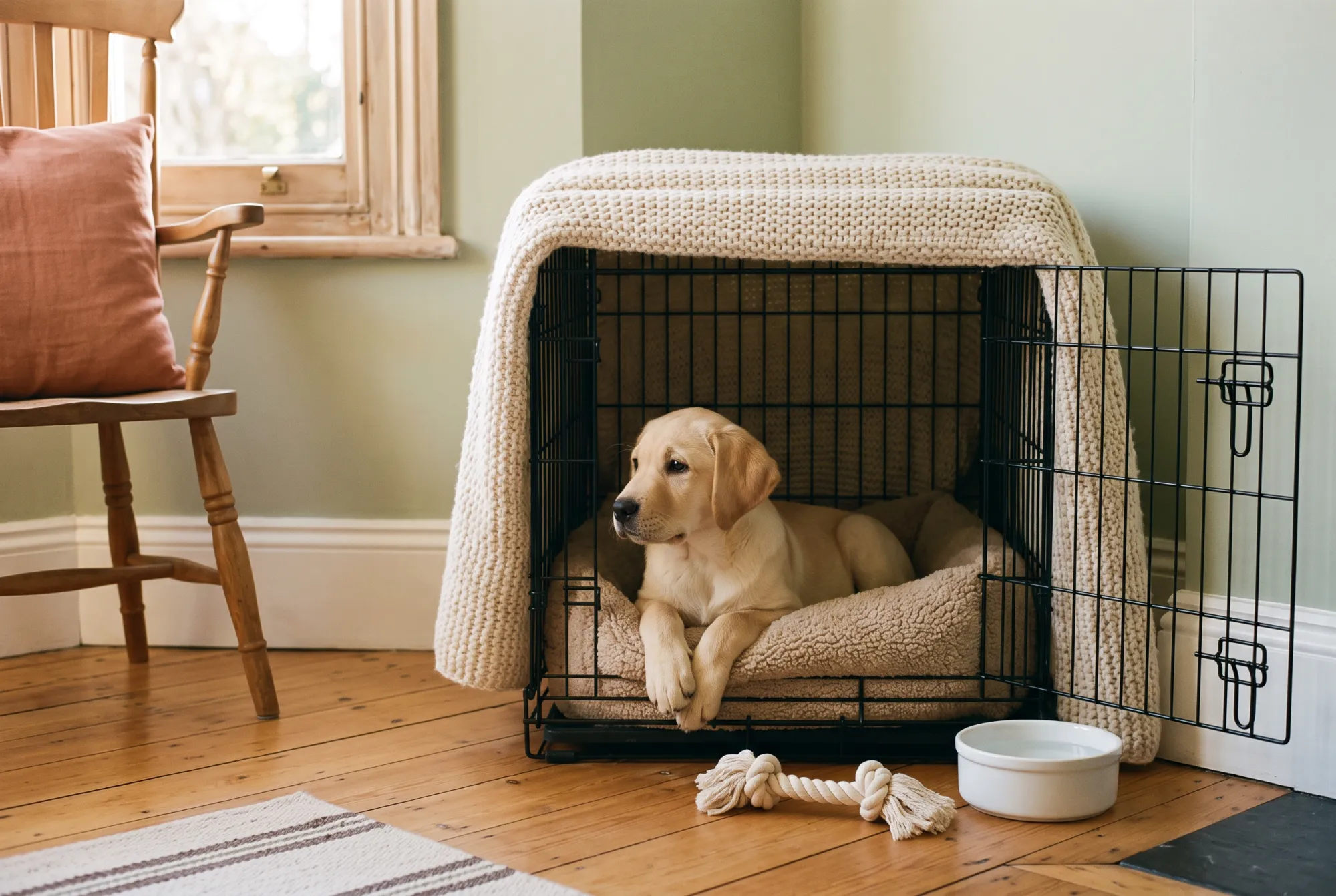
Puppies explore with their mouths, so puppy proof before collection day, as Blue Cross advises, and look again as your puppy grows and reaches higher. Set up a den in a quiet part of the house, with food and water somewhere separate.
The Royal Kennel Club warns that running up and down stairs can damage a puppy's growth plates, so fit a stair gate, and use baby gates to close off rooms. Never leave a young puppy alone in the garden.
- Cables and chargers: tidy them away, and never leave a puppy alone in a room with live wires.
- Cleaning products and medicines: lock them away.
- Shoes, socks and small objects: put away anything your puppy could chew or swallow.
- Food and bins: keep all food out of reach, including the kitchen bin, as chocolate and grapes can be lethal to dogs.
- Houseplants: move any that are toxic to dogs out of reach.
- Fences and gates: check for gaps and holes, as puppies dig and climb.
- Ponds: fence them off or cover them, as a puppy can drown in a garden pond.
- Garden chemicals and compost: lock away slug pellets, weed killer and sharp tools, and use a compost bin with a screw top.
What do I need for a new puppy?
Buy the basics before collection day and add more once you know your puppy. For the journey home, bring a comfortable carrier, a blanket, spare bedding and water.
Choose toys that are too big to swallow, avoid sticks and golf balls, and stay with your puppy when they try anything new. Use the crate as a den, never as a punishment, and take the collar off inside it so it cannot catch.
- A bed or crate with soft, washable bedding.
- Separate bowls for food and water.
- The food your puppy already eats.
- A collar or harness, with room for two fingers under the collar.
- A lead that is not too long or heavy.
- An ID tag with your name and address.
- A few safe toys and chews for teething.
- Poo bags.
- An enzymatic cleaner for accidents, which removes the smell that draws puppies back.
- A soft grooming brush.
Microchip, ID tag, vet and vaccinations
Every dog in the UK must be microchipped and registered on a database by 8 weeks old, so the breeder should do this before your puppy leaves. Ask for proof, such as the microchip certificate. Once your puppy is home, update the database into your name, as keeping the details current is your responsibility.
Your puppy must also wear a collar and tag with your name and address in public, even though they are microchipped. In Northern Ireland you also need a dog licence from your council, and it is an offence to take possession of a dog before you have one.
In Snootly, Pup Care keeps vaccinations, flea and worm treatments and weight together, and you can set a reminder for each next dose.
- Vet: register with a local practice before collection day, and ask how out of hours care works.
- Vaccinations: puppies usually start at around 6 to 8 weeks, with two injections 2 to 4 weeks apart, and some need a third. Your vet sets the course and tells you when your puppy can go out.
- Worming and flea treatment: ask what has been given and when, then follow your vet's plan.
- Insurance: arrange it as soon as possible, and check what each policy covers, as they differ.
Your puppy's first days and nights
Keep the first days quiet. Let your puppy explore one room at a time, hold off on visitors and let them sleep undisturbed in their den. Keep the food and meal times the breeder or rescue used for now.
Start toilet training on day one. Take your puppy out when they wake, after meals, after play and when excited, and reward them as soon as they finish. The Royal Kennel Club suggests going out every hour or two at first, while PDSA suggests every 2 to 3 hours in the day. Never punish an accident: it means your puppy needed more chances to go outside.
At night, keep your puppy's bed near you at first, then move it a little further away every few nights, as Dogs Trust suggests. It will be a while before they can last the night without a toilet break, so be ready to take them out quietly.
Always supervise children with the puppy. Socialisation is time sensitive and starts gently from day one; a separate guide covers it. Snootly's New Puppy checklist can set daily toilet break and meal reminders to suit your puppy's age, and the toilet reminders stop by themselves at around six months.
Common questions
How much does it cost to own a puppy in the UK?
PDSA estimates about £415 to £560 to get started, then £69 to £116 a month, depending on size, at 2024 prices. That includes the kit, food, insurance, first vaccinations and routine flea and worm treatment, but not the puppy itself or vet bills if they fall ill.
What should I do if my puppy cries at night?
Check the basics first: a chance to go to the toilet, a comfortable bed and a chew that is safe to leave with them. Dogs Trust suggests sleeping in the same room at first; if crying starts after you move away, go back and move more slowly. If your puppy still seems distressed, ask your vet about an accredited behaviourist.
When can my puppy go outside for walks?
When your vet says so, based on your puppy's vaccinations. PDSA says puppies are fully protected 2 to 4 weeks after their final injection. Until then, carry your puppy outside to see the world, and use your garden if it is secure from foxes and no unvaccinated dogs have visited recently.
How long can you leave a puppy alone?
Only for short spells at first, building up gradually while you are still at home. The Royal Kennel Club warns that regularly leaving a puppy for longer than a few hours can undo toilet training, so ask someone your puppy knows to come in and let them out.