Training
How to plan short, rewarding dog training sessions
A practical way to organise reward-based dog training: choose one skill, make the task achievable, record progress and plan the next session.
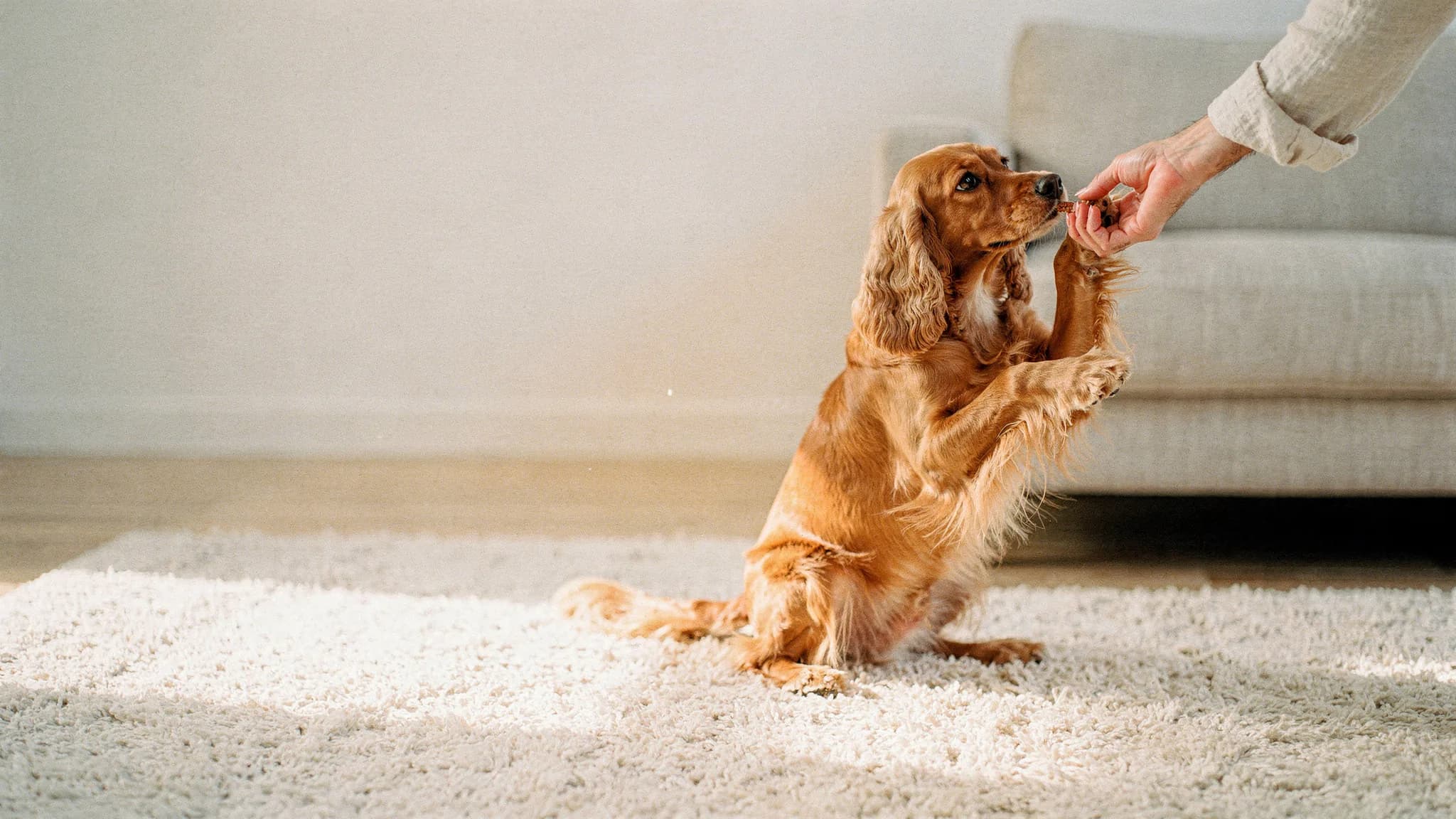
Plan a short dog training session around one clear skill, a reward your dog enjoys and a quiet place to practise. Make the first attempt easy, reward the behaviour you want and stop while your dog is still comfortable taking part. A brief note afterwards helps you choose a sensible next step.
This approach adapts the short sessions, reward timing and gradual progression in Snootly's training guides. It also follows the RSPCA's advice to use rewards, limit distractions and practise in short, regular sessions. There is no fixed number of minutes every dog must complete. A session can end earlier than you planned.
Choose one thing you can recognise and reward
Replace a broad aim such as 'better behaviour' with a small, visible action. You might work on a familiar sit in the kitchen, a moment of attention when you say your dog's name or walking a few steps beside you on a loose lead. Pick an exercise appropriate to what your dog already knows, using a clear reward-based teaching guide for that skill.
Decide what counts as progress before you begin. 'Turned towards me when I said their name in the living room' is something you can observe. 'Listened properly' is harder to assess and gives you less direction for the next attempt. Keep everyone using the same cue for the same action.
Prepare the space and rewards first so you can concentrate on your dog. Put your phone somewhere you can leave it alone. If you are using a timer, treat it as a reminder to check in, with permission to finish at any point.
Make the reward easy to understand
Rewards are individual. Food, a toy or a brief game can be useful when your dog actually wants them. Choose something suitable for your dog and the setting. Have it ready before asking for a familiar behaviour so there is no long search through your pockets afterwards.
Dogs Trust describes a marker as a signal that identifies the moment your dog has done the right thing. It can be a short word or a clicker that you have introduced through reward-based training. Mark the action as it happens and follow the marker with the reward. The marker tells your dog which moment mattered; it does not replace the reward.
If you are still learning the mechanics, practise your timing without the dog first. Decide where the rewards will sit and which hand will deliver them. That small preparation can make it easier to focus on the action you are teaching when the session starts.
- Have the reward ready before you begin the exercise.
- Watch for the specific action you decided to reward.
- Follow an introduced marker with its reward, then give your dog time before the next attempt.
Change one part of the challenge at a time
A skill learned at home needs practice in other suitable places. Plan those steps gradually. Snootly's training content uses duration, distance and distraction as ways to think about difficulty. If you ask for a longer wait, keep the setting familiar. If you move to a new place, start with an easier version of the exercise.
For example, you might practise a familiar cue in a quiet room, then try a few easy repetitions in another room on a later occasion. Keep a note of where it went smoothly before choosing the next setting. Moving straight from the kitchen to a crowded park changes several things at once and makes it harder to work out what your dog needs.
When an attempt does not work, pause and reduce the challenge. Check whether the place is too busy or whether you asked for too much. Avoid forcing a position or repeating a cue louder and louder. If your dog is worried or no longer willing to join in, stop. Fear, aggression or a history of biting calls for qualified individual support.
Finish with a useful note for next time
When your dog is still engaged, finish with a familiar action they can do comfortably and reward it. If they need a break, finish immediately rather than insisting on one last success. Put the equipment away and let the session end clearly.
Record the cue, setting and what happened. A note such as 'Name response in the kitchen, a few easy attempts; next time use the same room with the door closed' gives you a starting point. You can record attempts if that is helpful, but compare sessions in similar conditions. Success in a quiet room and success beside a busy footpath are different tasks.
Share the next step with anyone else who trains your dog. Agree on the cue and the reward so they can continue at the same level. Snootly's training tools let you log sessions and follow guided skills, which makes those details easier to keep together. Return to the exercise when you and your dog are ready, and adjust the plan as you learn what works.